Who owns what you generate: Artem on TheMagnifier podcast
On episode 5 of TheMagnifier I answered 14 questions: who owns an AI image, what you can protect, and what to do before you publish. Here are the answers, with the documents and index results behind them.
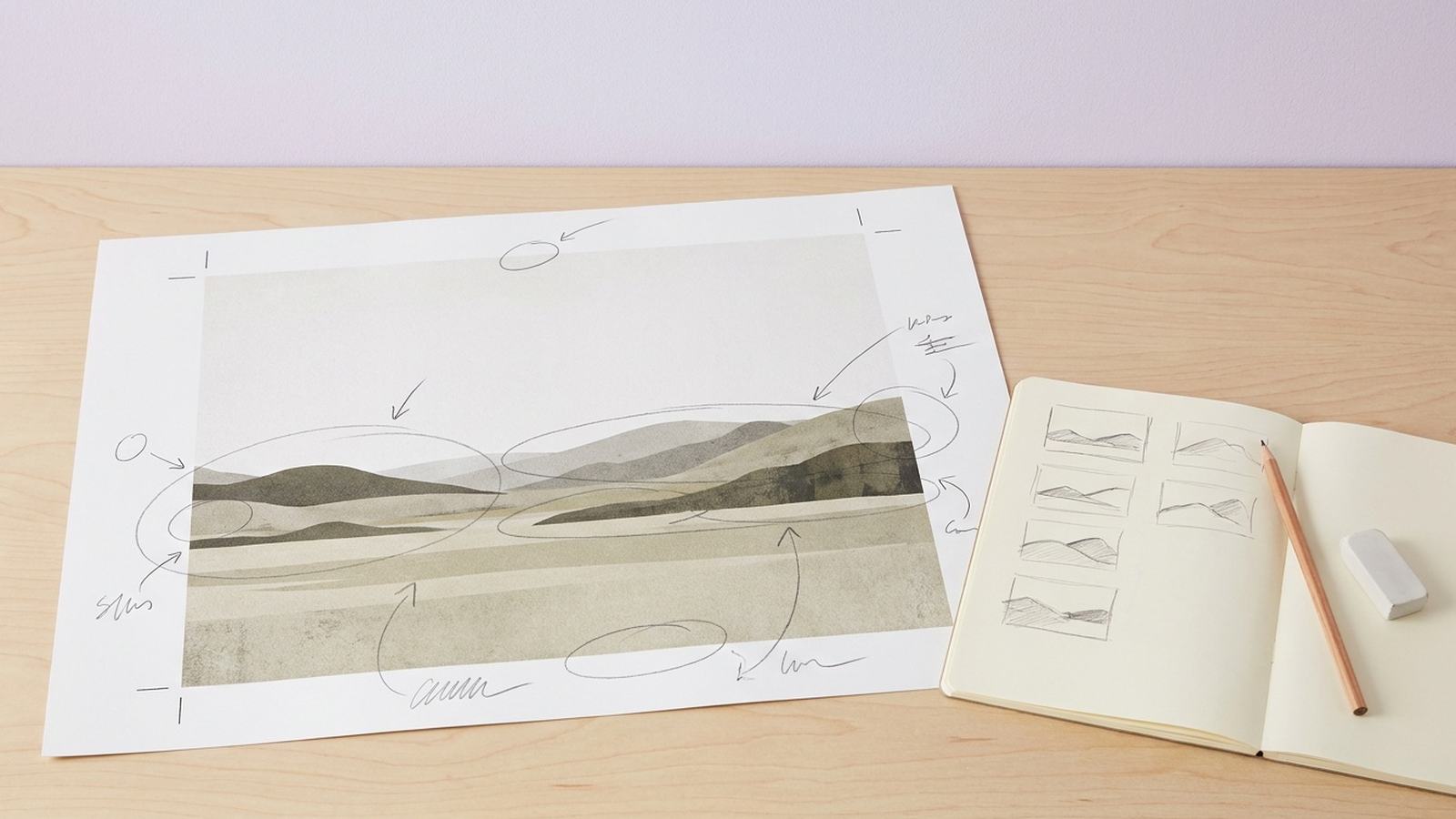
The idea in one picture: a generated image with pencil edits on top. Image generated with AI (Nano Banana Pro via fal.ai) and scored with CopyScore: no protected IP detected, risk low.
When an AI tool says "you own the output," it promises one thing: the tool won't claim it. The output becomes yours when you can show your work: what you picked, what you combined, what you fixed by hand. Prompts don't count, however many you write.
On October 28, 2026, I was the guest on episode 5 of TheMagnifier, hosted by Romain Brunswick. Forty-two minutes, 14 questions. Below are my answers by chapter, each linked to its minute in the episode, and the documents and IP Risk Index results that back them up.
Some background on why this topic is personal. I started as a book illustrator, then spent 18 years in advertising, including Saatchi & Saatchi, and worked as a creative director at Snap and a technical creative director at Meta Reality Labs (01:30). Commercial work taught me early that clients pay for the right to use your art.
One caveat from the episode description, in my own words: a similarity check shows you where the risk is. It doesn't replace a lawyer.
"Every platform says you own it." What does that mean?
Only that the platform won't claim it. Nothing more.
On the show I said it this way (04:33): "It doesn't mean that it's yours. It doesn't mean you're getting out of the public domain." In the US and the EU, an image made from a single prompt is open for anyone to use. It becomes yours when you can prove a person did the work: sketches, logs, ideas from before you hit generate (05:01).
What the law says
The U.S. Copyright Office wrote the same in January 2025, in its report on copyrightability: "Copyright does not extend to purely AI-generated material, or material where there is insufficient human control over the expressive elements." How the Office got there, and how the Thaler case ended at the Supreme Court, is in AI law myths.
What if a brand feeds the model its own style guide?
Nothing changes if the model made the whole image.
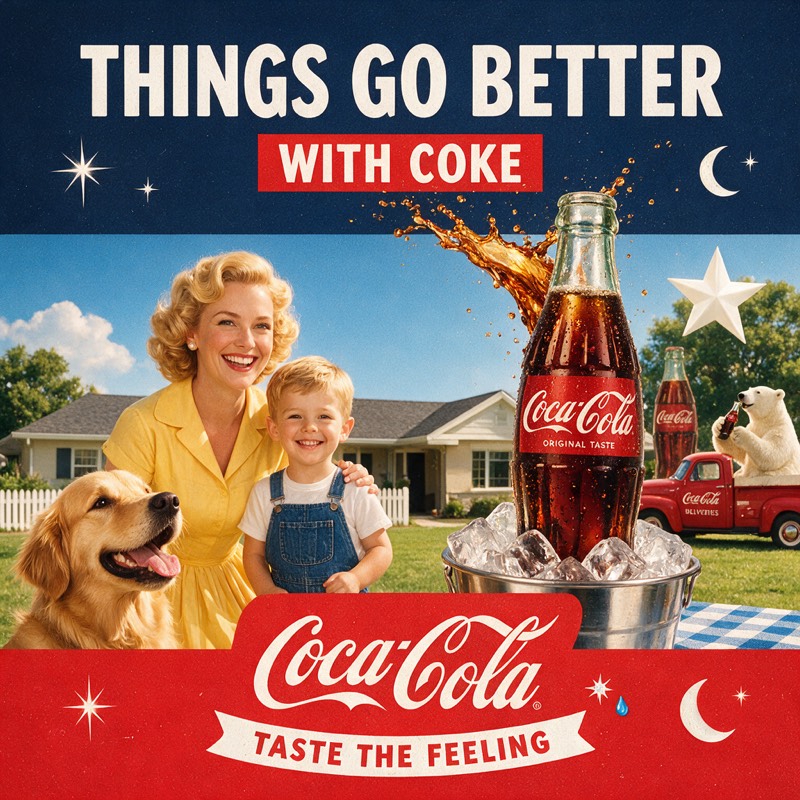
My example on the show (06:08): you generate an entire Coca-Cola commercial. No person authored the picture, so copyright doesn't cover it. What's protected is the trademark: the name, the logo, the bottle. Swap the logo for Pepsi, and nothing in the image belongs to Coca-Cola anymore. Most teams don't know this.
Here is what a generated soft drink ad looks like. The IP Risk Index gave Seedream 5.0 Pro a prompt with no brand in it. Every recognizable part of the result is someone else's trademark. The rest of the picture belongs to no one.
The second example had no names (06:38). A studio created characters with AI and said so publicly. Videos with those characters passed 40 million views on Instagram, and kids love them. Then a designer left the studio and started making the same characters. The studio says they're its property. The designer says AI made them, so they belong to no one. The two sides are in a legal dispute now. Picture Pixar not owning Toy Story: for a studio that lives on its characters, that is the whole business.
My takeaway (07:58): "Prompting will not help you, but editing an image will help you."
What the law says
The Copyright Office on prompts: "prompts alone do not provide sufficient human control to make users of an AI system the authors of the output." Registration is still possible when the human contribution is on the record. In April 2025, CopySight secured a U.S. Copyright Office registration for AI-generated content on behalf of a client.
What can you protect when you work with AI?
What you did yourself. I gave the list at the end of the episode (35:56).
Not protected
- Raw output, used as the model made it
- A copy of someone else's style
- Variations the model made without your direction
Protected
- What you selected and put together
- What you changed by hand
- How you arranged the elements in the frame
In my words: "select and collage your work by hand" (36:21), and "arrangements of elements is very copyrightable" (36:37).
What the law says
The same Copyright Office report protects "the creative selection, coordination, or arrangement of material in the outputs, or creative modifications of the outputs." In February 2023, the Office cancelled the original registration for the comic Zarya of the Dawn and issued a narrower one: it covers the text and the way the pages are put together, not the Midjourney images (the Office's letter).
The number of prompts doesn't help. On the show I mentioned a case where an artist lost "having 600 iterations of prompt" (37:47). That's the Copyright Office Review Board's September 2023 decision on "Théâtre D'opéra Spatial": the artist entered prompts "at least 624 times," and registration was refused.
What CopySight checks today: images, video and 3D (08:14). Not music: "It's just a mess" (08:45), with different courts and different rules. Not text. Fonts and voices are next on the roadmap, for next year.
Why does someone else's character show up when you didn't ask for it?
Models learned from the whole internet, and they can't unlearn it: "it's irremovable. You can't retrain it" (11:11).
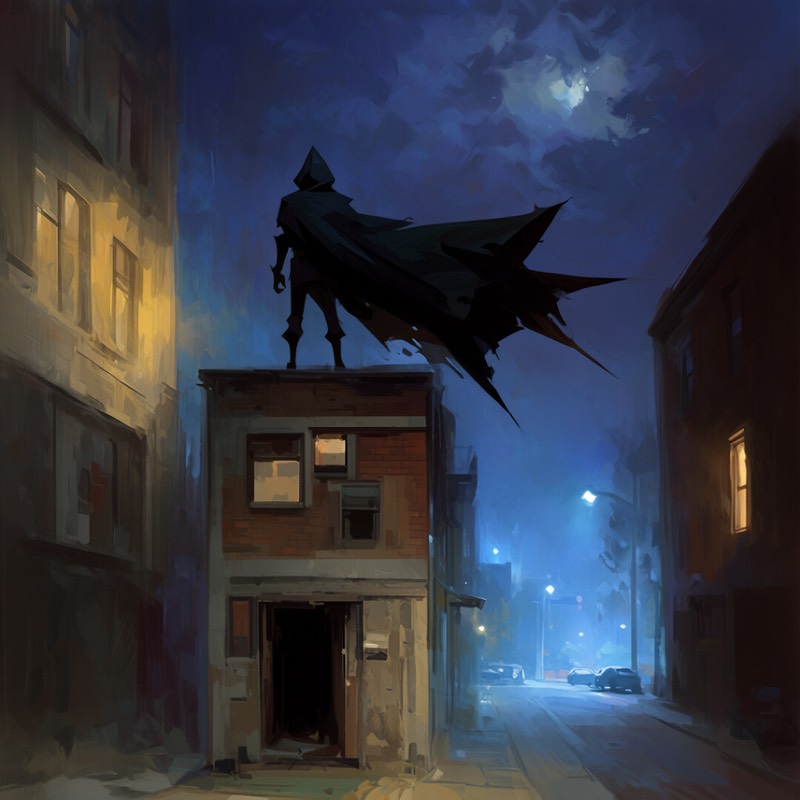
My example (14:22): ask for "a superhero wearing all black, revenging his family, and always angry," and you get the Punisher or Batman, "because it doesn't know any better." It works in ChatGPT, in Gemini, everywhere. My rule (14:50): "If you name IP, you'll get IP."
You don't have to name it, either. The IP Risk Index sends every model the same five prompts per character or brand, from the name itself down to a bare hint. "A shadowy protector watching over a quiet urban street under moonlight" returned Batman from two models. "A lone vigilante patrolling the streets of a crime-ridden city at night" returned Batman, with the Wayne Enterprises logo, from a third.
265 of 1,012 prompts
never named a character or brand.
They returned protected work anyway.
IP Risk Index, 10 models, prompts that only hint. The match is not always the character the prompt hinted at.
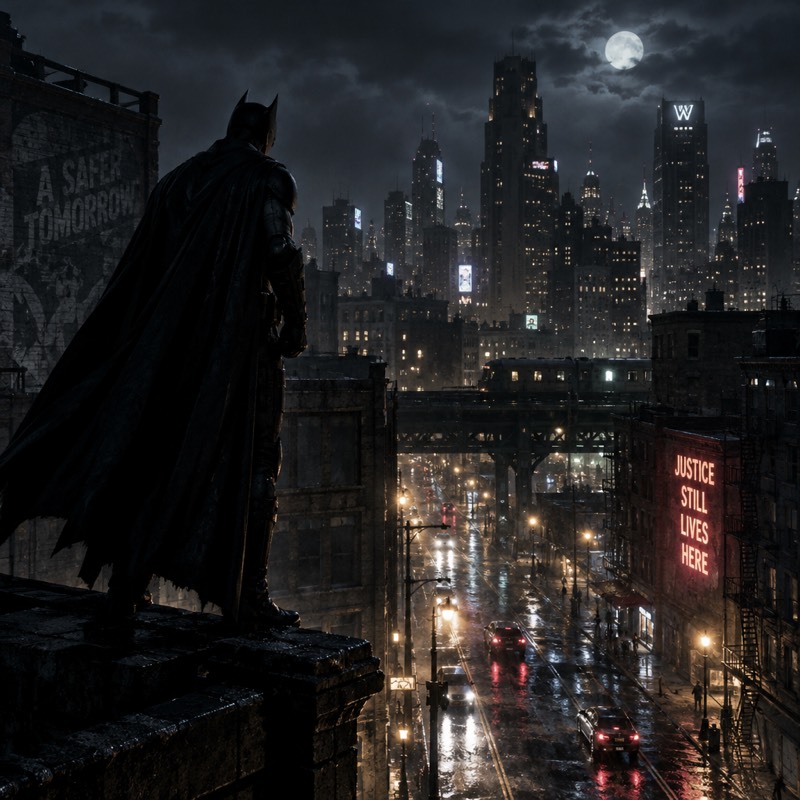
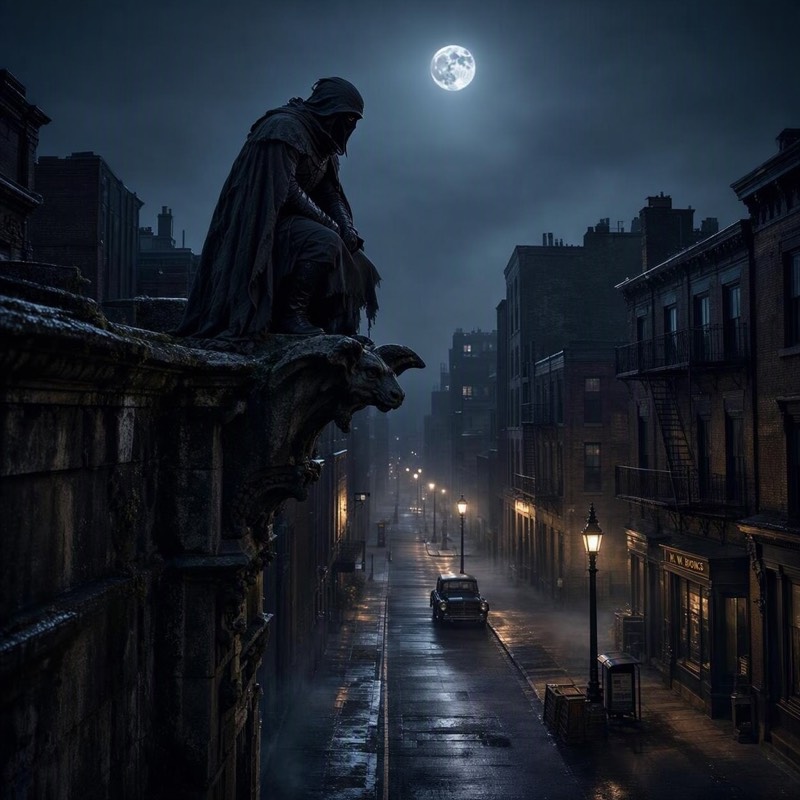
Source: IP Risk Index, 5,007 checks across 10 models and 102 properties, newest run October 22, 2026, checked November 2, 2026. Scores measure visual similarity, not legal infringement.
On the show I also gave numbers from our own checks (12:31): for the strongest Chinese models, such as Seedance, Kling and MiniMax, "it's 41% according to our data" of output with a high similarity score, and about 25% in general. Our published sample, 34.7% high-risk out of 53,000 checks, and the five-model test are in A clean prompt is not a clean image.
Don't models refuse to draw protected characters?
Some do, when you use the name. Then they draw the character from a description.
The host pushed back (15:00): Seedance won't draw Macron or Mickey Mouse. My answer (15:36): "those guardrails are not really working," and the market knows it. A model is bad at checking itself (15:53): it lets risky output through and blocks harmless requests. That held for all seven or so models we had tested.
The index shows the pattern. GPT Image 2.5 Sunburst refused "Paddington Bear" and "Angry Birds" by name. Then "A polite bear from Peru staying with a kind family in England" returned an image CopyScore matched to Paddington, and a prompt about birds seeking payback against farm animals returned Angry Birds characters. Seedream 5.0 Pro refused "Xenomorph," refused "a scene from the Alien franchise," and refused a detailed description. Then "something deadly hiding in the vents of an abandoned spaceship" returned a scene CopyScore matched to the Xenomorph and the motion tracker from Alien.
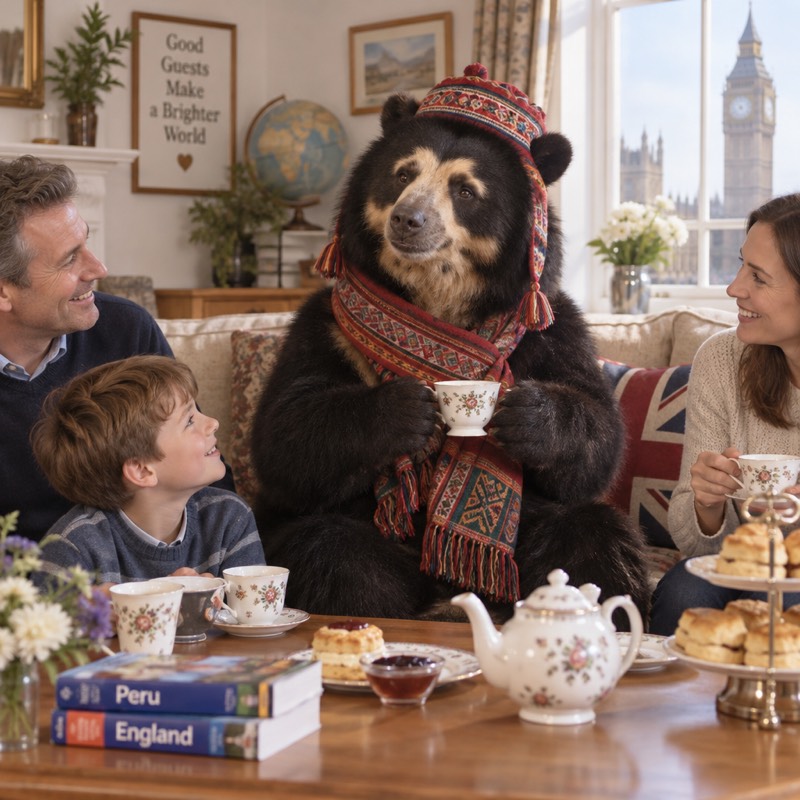
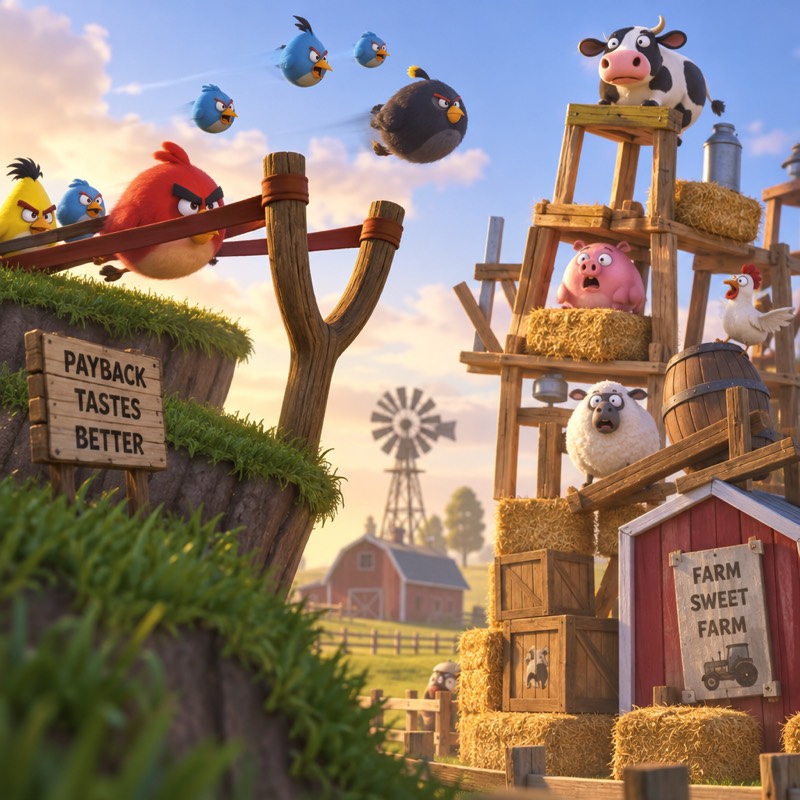
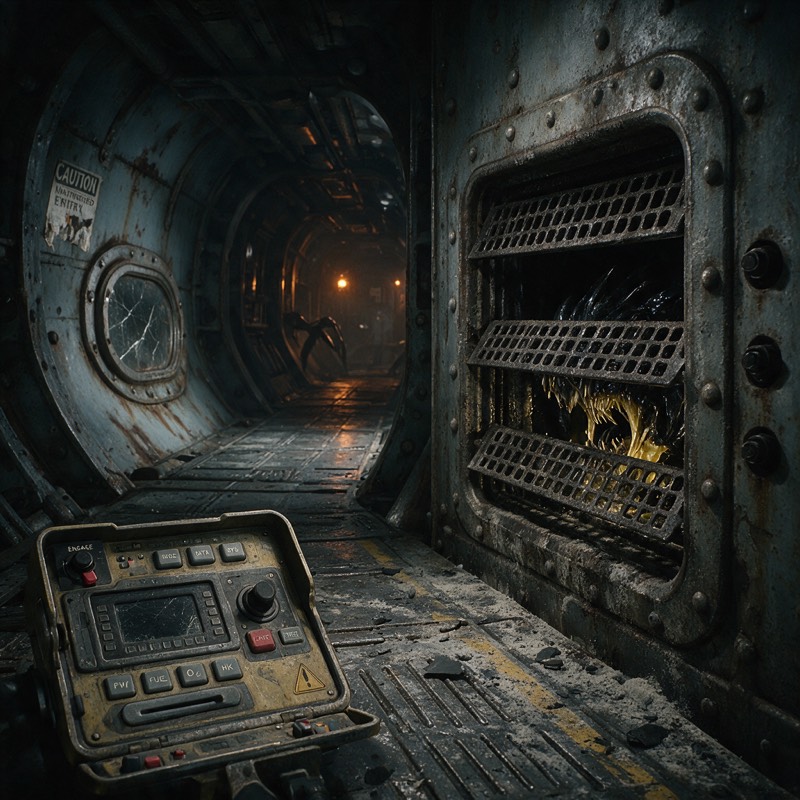
Source: IP Risk Index live checks, October 14, 2026.
How does the check work?
It measures how close an image is to a known original and puts a number on it (16:21). "Everything in AI-generated world is derivative" (17:30): a model won't make an exact copy of Mickey, but it can get very close.
- No logo needed. An illustration of a Birkin-style bag with no Hermès logo scored 70–85% similarity on design elements alone (19:02).
- Part by part. The search runs on each part separately: "not just the Mickey Mouse, but the ears separately, face separately" (21:21). That's how it catches mash-ups: half one hero's suit, another hero's cape.
- Faces and roles. A photo of Jon Hamm comes back as Jon Hamm. An AI version of him in costume comes back as Jon Hamm and as Don Draper from Mad Men (21:43).
- Where the reference data comes from. The core is characters and brands from 30 years of US court cases. On top of that come large labeled datasets, "10 billion, I think, data points" (20:01), and customer data. We don't train on any of it: "We just compare" (20:34).
- The limit. "I'm not saying that this is like a legally kind of perfect scoring, but this is the closest we get there" (22:30). And on what a score looks like: "you will see with your bare eyes that if it's 75, you see the resemblance."
A similarity score isn't a verdict. Whether to publish is a call for your lawyer.
What comes next for rights holders, models and artists?
Rights holders. The host asked whether we'd build a tool for owners whose characters get copied (22:54). I called our approach "carrot and the stick" (23:20), and the rule is simple (23:49): "if you don't want to get ripped by models, don't rip others' IPs." Then the warning (24:47): "Enforcement is always late, but when it comes, it's not fun." Customers who posted unchecked AI content a year ago have had their YouTube channels banned. More than 800 studios and creators use CopySight today.
Models. What if lawmakers ban models trained on other people's work (25:15)? Licensed models already exist, I said, but the market keeps choosing open Chinese models because they're cheaper and just as good (26:09). A ban won't stop that. A check won't make any model safe, but it gives you "a certain level of protection" (27:35).
Artists. The host compared it to Spotify, which pays musicians per stream (27:59). Can AI work like that? My plan is for CopyScore to become a shared scale, "the FICO credit score for content safety" (29:22), so a platform and a studio look at the same number. OpenArt is one of those platforms: its video check runs on CopySight.
Then payment (30:15). An artist registers a work. A commercial project uses it as a reference, and the check shows 25% similarity. Instead of regenerating, the project pays: if the work is priced at $100, the artist gets $25. The first experiment like this is live (31:18), and we've shown it to Sony and Sundance. Registration and payouts run on Soneium, the blockchain backed by Sony, in USDC: "It's just dollars, basically" (33:23).
What to do today
My advice for anyone doing commercial work with AI (35:13):
- Don't count on prompts. They don't make you the author, however many you write.
- Work by hand on top of the output. Select, combine, edit, arrange.
- Record your decisions as you go. Sketches, references, versions: what you chose, when and why. The formula from the show (36:53): "document your creative direction, show iterative choices, register early, and use CopyScore before you ship."
- Register early. Until you prove authorship, your work is "legally homeless. Basically, it's a public domain" (37:24).
- Check similarity before you publish. The check shows the risk. The rights decision stays with your lawyer.
- Keep the file's history. I call it a certificate (38:47): content credentials (C2PA), a watermark, and a log of who made what and when. Why credentials alone don't prove the content is clean is in Copyright works after the fact.
On labels, I said they're already required in the EU and coming in California (39:06). The law bears that out, with one detail: the duty sits with the companies that make the models. Under Article 50 of the EU AI Act, from August 2, 2026, providers of generative AI must put a machine-readable mark on their output, with a grace period to December 2026 for systems already on the market. Whoever publishes a deepfake has to disclose it. California's AI Transparency Act applies from the same date and requires a hidden mark from generative AI providers with more than one million monthly users.
The idea I keep coming back to
you use AI "as a tool or as an author." The author is whoever can show the work. (37:17)
Subscribe below to get one long-form article a week.
Artem Petrov is co-founder and CEO of CopySight. He was the guest on episode 5 of TheMagnifier, released October 28, 2026.
This is not legal advice.
Images credited to the IP Risk Index were generated by the models named in each caption during index runs and are shown to document similarity findings.
Score a generation before it ships
CopySight checks an AI-generated image against known characters, faces and brands, and returns a similarity score with the matches behind it.
One long-form a week
We publish one article a week on how AI copyright risk actually works and what teams do about it. Leave an email and each one arrives the day it goes up.