The term sheet waits on the AI copyright answer
Partnership lawyers on both sides ask who checks AI-generated material for other people's IP. Notes for your next deal from a Tokyo lunch on IP governance in July 2026.
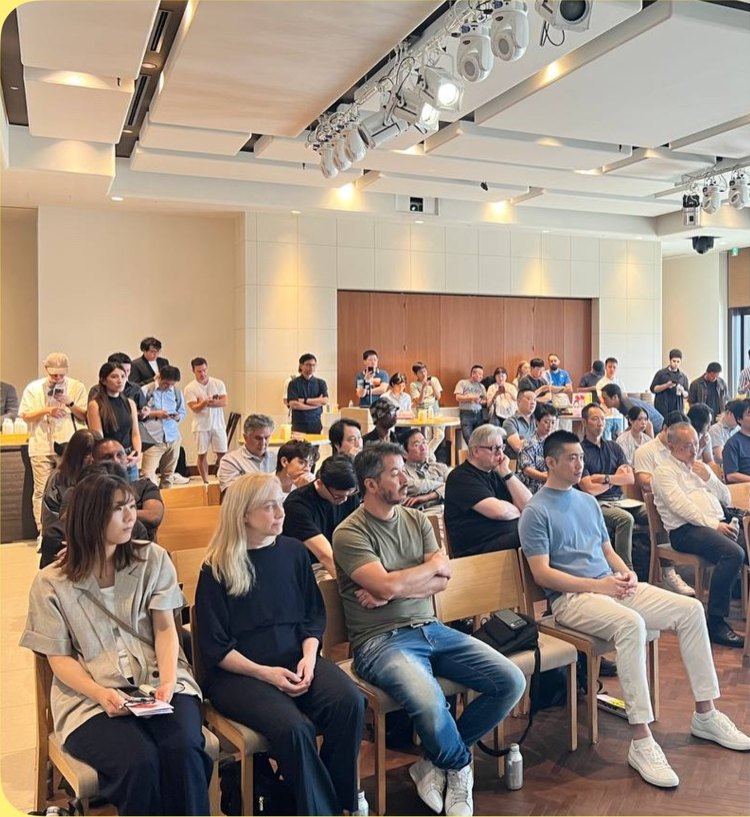
The lunch at Andaz Tokyo Toranomon Hills, July 2026.
A partnership that carries AI-generated material stops at legal review. The partner's counsel asks who checks that material for other people's IP. Next they ask what record shows the review happened. If nobody on your side can answer, the draft waits. Have that answer ready before negotiations start: a named owner, the stage where the review happens, and a written record.
You've agreed on the commercial terms, and the launch date is on the calendar. That is usually when the question arrives. In a June 2026 survey by amana, a Japanese creative company, copyright was the most-cited concern about generative AI among marketing and creative staff at Japanese companies, at 32.5%. If the answer already exists, both legal teams start from a named owner and a record, and the launch date is less likely to move.
Who can stop a partnership that carries AI-generated material
Three parties can stop the signature: your counsel, the partner's counsel, and security or the team that handles unreleased material. If you run enterprise partnerships, legal review is where the deal leaves your hands.
Your counsel answers for your company's exposure. They write the clause that covers AI-generated material. The partner's counsel answers for theirs. The two lawyers read the same draft for different risks.
Both lawyers ask who checks this material for other people's IP: characters, logos, likenesses and artwork. They also ask what record shows the check happened. A note in a chat thread, or someone's memory of a review, gives neither legal team a document to cite. Security asks something else: who sees the material before it is public. When that question arrives last, after both lawyers have what they need, it reopens a draft everyone thought was closed.
In the usual order, the commercial terms close first. Then both lawyers ask who checked the material. Nobody on the business side owns the answer. The draft goes back and forth, and the launch date moves with it. The time from term sheet to signature grows with every round. Nobody decided to slow the deal down. The same stall happens when an enterprise safety objection holds up a deal.
Now run the same deal in the other order. Before the first draft, your side has written down who checks the material, at what stage, and what record the check leaves. Security has also named who may see the material before it is public. That gives you a check both legal teams accept: each can name it, and its owner, in the clause.
Your counsel has language to review instead of a gap to fill. The partner's counsel has a named owner to ask. Security gets its answer on who may see unreleased material at the start, not at signature.
Why copyright can come up early with a Japanese partner
In a survey published in June 2026 by amana, a Japanese creative company, 400 marketing and creative staff at Japanese companies answered questions about generative AI. Copyright and rights concerns were the most-cited challenge, at 32.5%. The lack of evaluation standards came next, at 24.0%. Unstable quality followed, at 21.5%. The respondents were marketers and creators, not lawyers. When marketers and creators at Japanese companies cite copyright most, a Japanese partner's counsel may raise it before your draft arrives. Your clause on AI-generated material has to answer it.
The survey found that 59% of respondents use generative AI in their creative work. Among those users, 71.4% do not actively publicize it. Your partner may be a Japanese company, or its creative work may come from Japan. Either way, people like the ones amana surveyed shape the material your partnership carries. Some of it can be AI work nobody has announced. Your clause has to say which assets it covers.
What CODA asked OpenAI about Sora 2
On October 27, 2025, the Content Overseas Distribution Association (CODA), a Japanese content industry body, sent OpenAI a written request about Sora 2. CODA asked that "its members' content is not used for machine learning without their permission." Your partner's counsel may have read it already.
On April 1, 2026, CODA announced that OpenAI would discontinue Sora 2 as a product, including its app and API. OpenAI shut down the Sora website and app on April 26, 2026. OpenAI's help center gives September 24, 2026, as the date the Sora API is discontinued. CODA's letter shows a Japanese rights body putting its concerns about generative AI to a vendor in writing. A partner's counsel in Japan can cite that letter when they ask who checked the material in your deal for other people's IP. The draft waits until someone on your side can answer.
What happened at the Tokyo lunch on IP governance
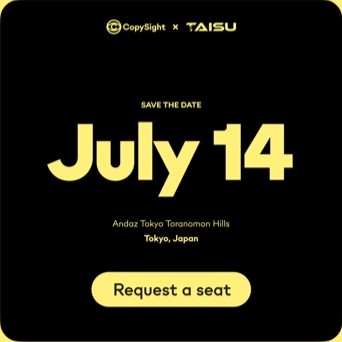
In July 2026, CopySight co-hosted a lunch in Tokyo titled "IP Governance in the Age of Generative AI." The co-host was Taisu Ventures, one of CopySight's seed investors. The lunch took place at Andaz Tokyo Toranomon Hills during WebX, a Web3 conference in Tokyo. The room held Japanese studios, AI platforms, game publishers, agencies and creators. Companies like these sit on both sides of a partnership built on AI-generated material. One owns the IP. The other makes new material with AI. Neither side signs until someone can say who checked that material for other people's IP.
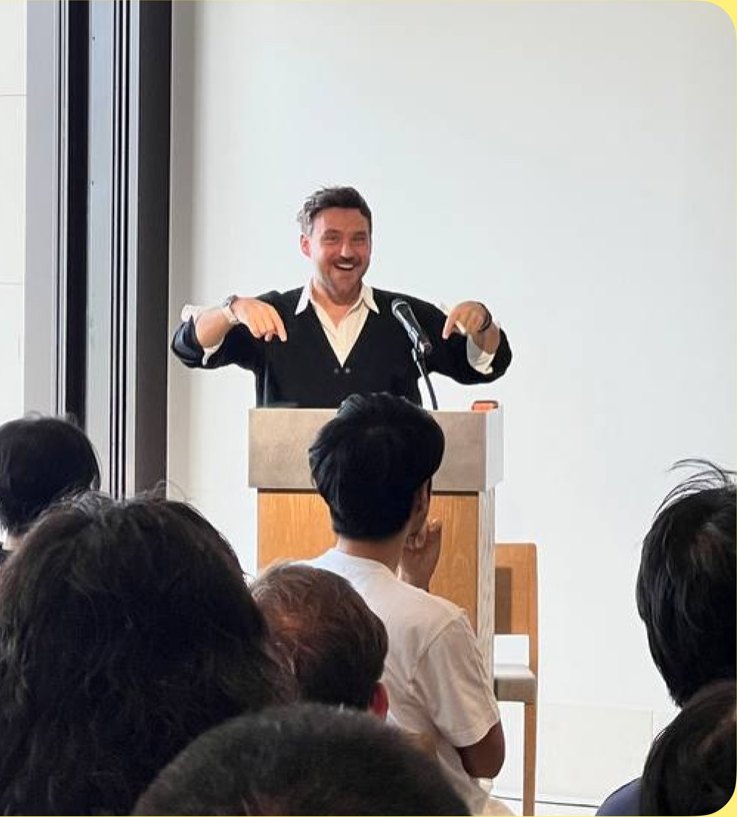
CopySight ran a live CopyScore™ check in front of the room. CopyScore is a similarity score with the matches behind it. Six executives booked one-on-one meetings on the spot. The IP question came up at an event, before any draft. In your deal, the partner's side may raise it just as early.
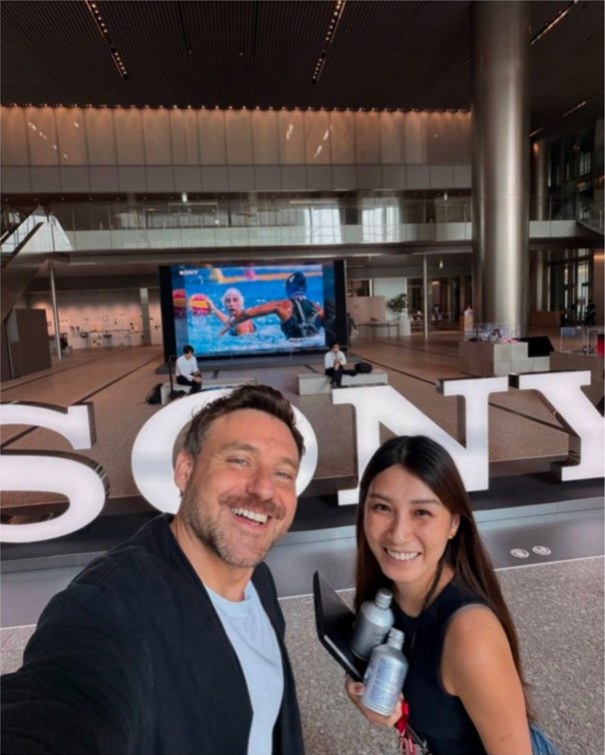
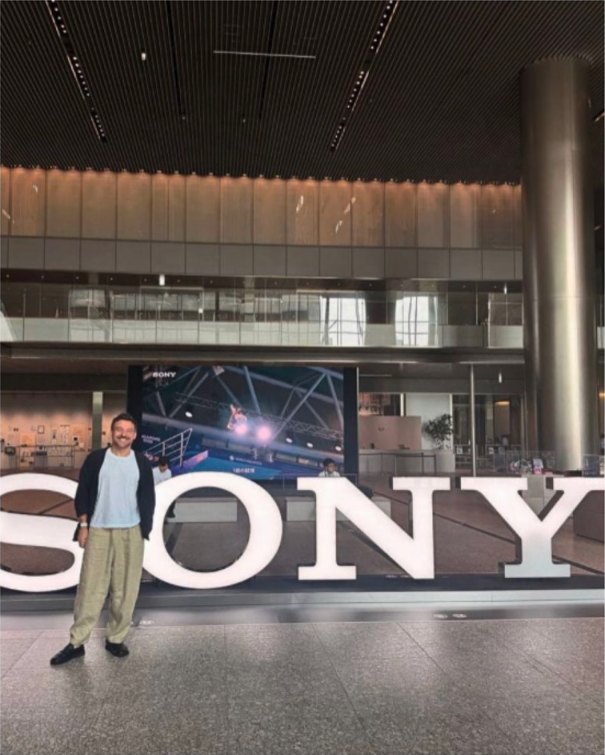
After WebX, CopySight met with Sony Group at its headquarters in Tokyo. CopySight will be at Token 2049 in Singapore, October 7 to 8.

What to settle before the next draft
Before the next draft, settle who owns each part of the answer. That covers what your counsel requires in the clause, what the partner's legal team asked for last time, and who may see the material before it is public.
- Ask your own counsel what they will require in the clause on AI-generated material, and which items come first. Get that list in writing before the partner's counsel sees the first draft. If an AI vendor made part of the material, add the questions to put to an AI vendor before you use generated content.
- Ask your partner when their legal team will review the term sheet, and what they asked for the last time a deal carried AI work. Put that answer next to your counsel's list, so both sides start from the same questions.
- Bring your security team in early, and ask them who may see the material before it is public.
- Write the answers down, with a name next to each one. Any line without a name is a part of the answer nobody owns yet.
The copyright answer belongs on the table before negotiations. Part of it is a record of which existing works the material resembles. Pick a sample of material your side already owns and plans to bring into the partnership. Have whoever manages that material on your side run that sample in CopySight. You get a CopyScore for each asset, with the matching works listed, to put next to your counsel's list.
Score a generation before it ships
CopySight checks an AI-generated image against known characters, faces and brands, and returns a similarity score with the matches behind it.
One long-form a week
We publish one article a week on how AI copyright risk actually works and what teams do about it. Leave an email and each one arrives the day it goes up.