Which AI generators ship a built-in IP check, and which do not
We read the public pages of 22 image and video generators. Two have a built-in check of the finished image: OpenArt and ImagineArt. Most others block prompts that name a character or promise to cover legal costs.
On November 2, 2026, we read the pages of 22 image and video generators. Two have a built-in check of the finished image: OpenArt and ImagineArt. Shutterstock and Envato review images for some customers. The rest block prompts, promise to pay on a claim, or leave the risk with you.
An AI-generated image or clip can look like someone else's character, logo or famous face, even when you asked for nothing of the kind. Sitting in a folder, that's harmless. In an ad, on packaging or in a film, it can bring a claim from the rights holder. That's why teams that work with generators ask whether the generator checks this for them.
What generators mean by IP protection
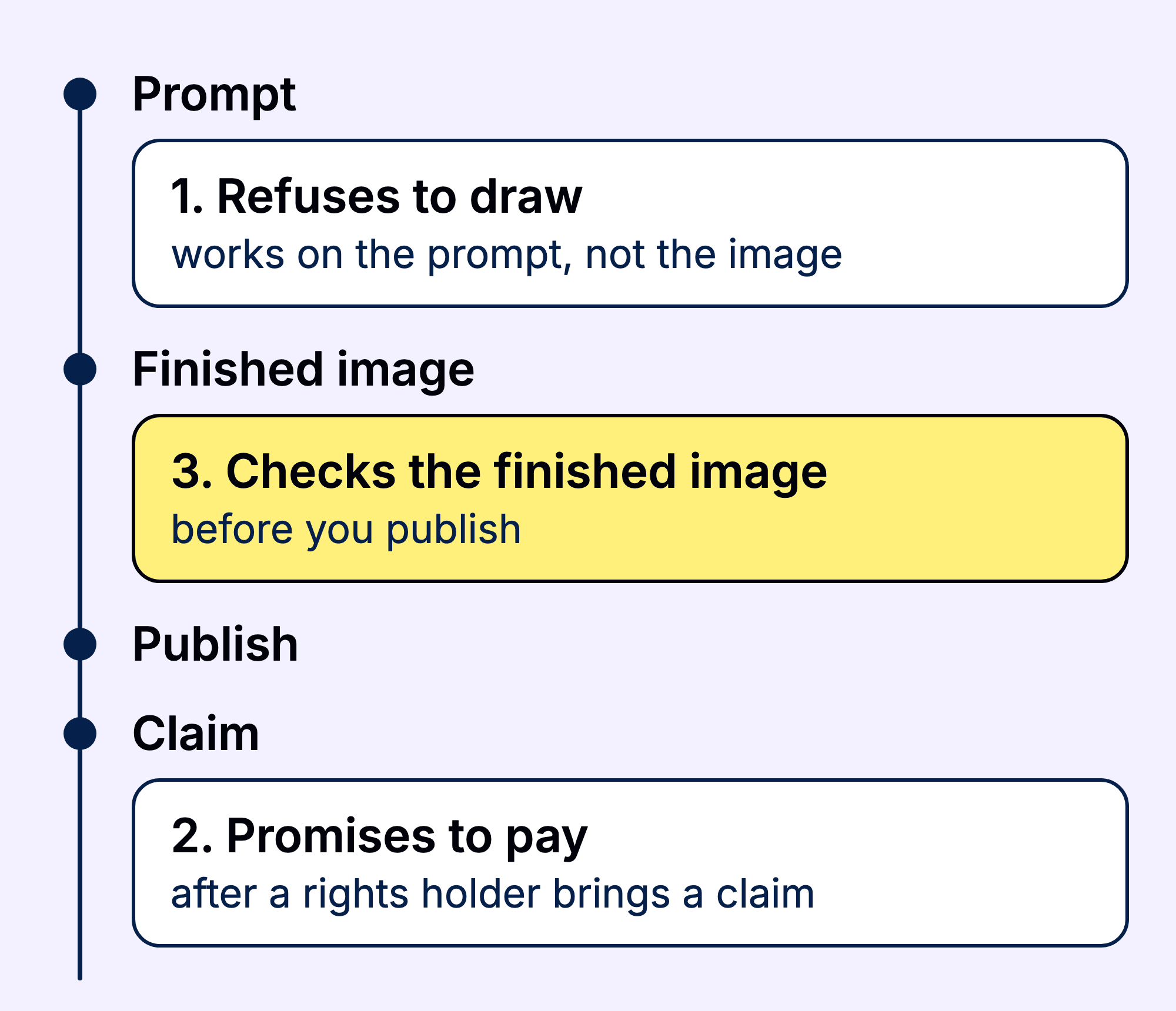
Most generators we read, 17 of the 22, say something about protecting users from infringing IP, or intellectual property: characters, logos, brands and faces that someone holds the rights to. Behind those words sit three different mechanisms, and only one of them tells you anything about the finished image.
- The generator refuses to draw. If a prompt names a famous character, brand or celebrity, the generator won't run it. That stops the most obvious mistake. But getting an image back doesn't mean the image is clean.
- The generator promises to pay. It covers legal costs and damages if a rights holder brings a claim over the image. Lawyers call this indemnification. It's insurance for after the problem has happened. It shows you nothing in advance, and it's almost always reserved for enterprise customers.
- The generator checks the finished image. It compares the output with a database of known characters, logos and faces and tells you what it found before you publish. Of the three, it's the only one that tells you about a problem before anyone else sees the image.
What the 22 generators say about themselves
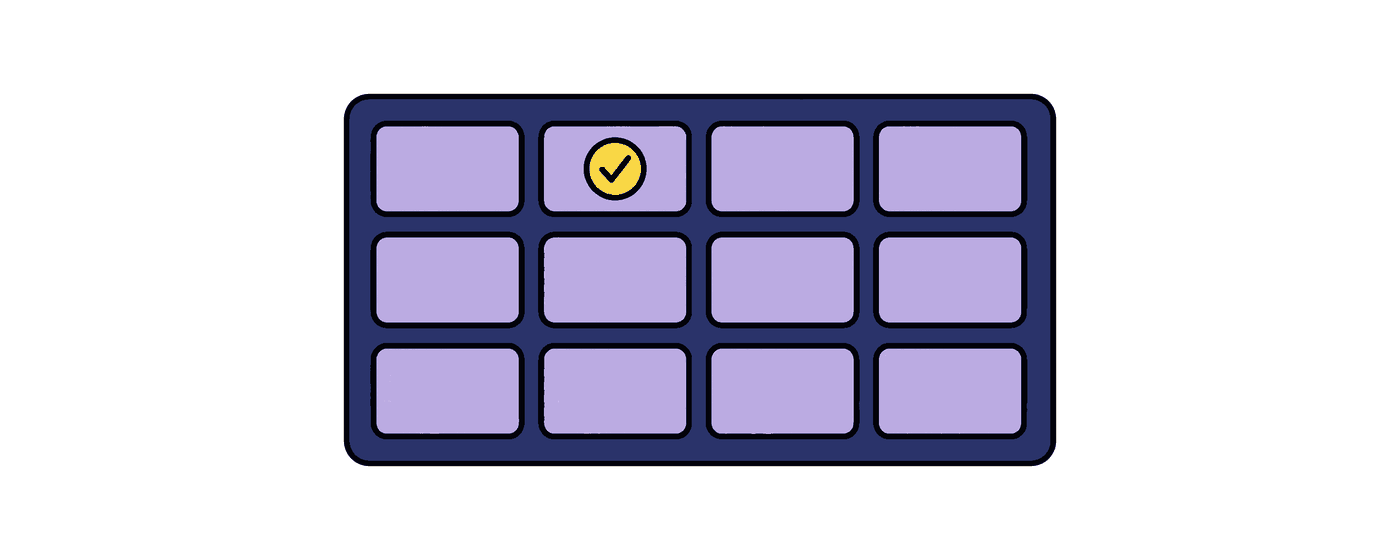
Generators most often block prompts that name celebrities, known characters and brands. More than half promise to pay if there's a claim, almost always under an enterprise contract. Hardly any look at the finished image. And the five at the bottom of the table say one thing in their terms: what you publish is on you. Midjourney puts it this way: "You are solely responsible for determining the appropriateness of using or redistributing the Assets."
The table sums up what each generator says on its own pages. "Not stated" means its pages say nothing on that point.
| Generator | Refuses to draw | Promises to pay on a claim | Checks the finished image |
|---|---|---|---|
| OpenArt | not stated | enterprise customers | yes, you run it |
| ImagineArt | not stated | not stated | yes, you run it |
| Shutterstock | not stated | after staff review | staff review, some plans |
| Envato | not stated | enterprise, after review | internal review, enterprise |
| Adobe Firefly | not stated | some plans | not stated |
| Canva | yes | enterprise customers | not stated |
| Google (Imagen, Veo, Gemini) | yes | Google Cloud customers | not stated |
| Microsoft | not stated | commercial customers | not stated |
| OpenAI | yes | ChatGPT Enterprise and API | not stated |
| Runway | yes | enterprise customers | not stated |
| Getty Images | not stated | under contract | not stated |
| Freepik (now Magnific) | not stated | Business and Enterprise | not stated |
| Krea | not stated | enterprise customers | not stated |
| Bria | warns only | enterprise customers | not stated |
| Higgsfield | yes | not stated | not stated |
| Luma | yes | not stated | not stated |
| ByteDance (Seedance, Dreamina) | yes | not stated | not stated |
| Kling | not stated | not stated | not stated |
| Midjourney | not stated | not stated | not stated |
| Leonardo.Ai | not stated | not stated | not stated |
| Ideogram | not stated | not stated | not stated |
| Stability AI | not stated | not stated | not stated |
Source: each generator's own public pages, linked in the table, read November 2, 2026.
Why refusing to draw is not enough
The guardrails don't really work, because a model is bad at checking its own output. The host of The Magnifier podcast asked me exactly this in the episode released October 28: if the generator won't draw Mickey Mouse by name, isn't that enough? My answer was no. As I put it on the show: if you name IP, you'll get IP.
A character can also show up with no name in the prompt at all. In our test of five models, one refused every prompt that named a character and still drew the character from hints: A clean prompt is not a clean image.
Filters also err the other way. Higgsfield says its IP check can catch original content too. Luma says its moderation sometimes blocks a prompt by mistake, for example over a famous name or a word with two meanings.
Why a promise to pay is not a check
A promise to pay protects you after a rights holder has made a claim. It doesn't tell you which image to fix before you publish. There's another approach: train the model only on images the developer has rights to. Adobe Firefly, Bria and the Getty Images generator work this way. But as I said on the same episode, the market still picks open models, the ones anyone can download and run, because they match the quality and cost less.
Conditions on the promise to pay
- Google. The indemnity applies only if you "didn't try to intentionally create or use generated output to infringe the rights of others."
- Shutterstock. "If your plan does not include human review, or if the image hasn't been reviewed yet, it is not indemnified."
- Envato. Using output its review hasn't approved is "entirely at your own risk."
What a check of the finished image gives you
A check looks at the file itself. Before you publish, you learn whether it contains someone else's character, logo or face, and you get a record you can show a lawyer or a client.
OpenArt's check runs on CopySight technology; OpenArt says so on its feature page. We showed an earlier version of it in Enterprise AI deals stall on one IP question. Shutterstock and Envato review finished images too, as a separate review for some customers. Shutterstock's staff review takes 1 to 2 business days. Envato says its review may involve people.
OpenArt: IP Safety Check
You pick the files and run the check yourself: up to 32 images and videos at once, including files made in other tools. For each file, OpenArt shows whether it found a match and gives you a PDF report. Video results come with a frame timeline.
ImagineArt: Copyright Checker
The Copyright Checker is a step in a workflow: generate the image, run the check, pass the image on. The output is a detailed report.
What both say
The check flags risk but doesn't replace a lawyer. ImagineArt calls it "a screening aid, not a legal clearance." OpenArt says the tool "doesn't provide legal advice, and is not intended to replace your own judgement or legal counsel."
What to ask before you publish

- Does the generator check the finished image, or only my prompt?
- What does it look for: logos, characters, famous faces?
- Do I get a report I can send to a lawyer or a client?
- Does the check work on video and on files from other tools?
- If it promises to pay on a claim, on which plan, and when does it refuse to pay?
If your generator doesn't check the finished image, you can run the check as a separate step, after generation and before you publish. That's how CopySight works. You upload an image or a video and get a report on what it resembles and how closely. The decision to release stays with your lawyer.
If you build your pipeline in ComfyUI, a tool where generation runs as a chain of nodes, you can add the CopySight check as one more node. It's on GitHub.
Check your own files in CopySight.
Artem Petrov is co-founder and CEO of CopySight. He talked about who owns AI-generated work on The Magnifier podcast, in an episode released October 28, 2026.
Illustrations generated with AI (Nano Banana Pro via fal.ai) in the CopySight illustration style and scored with CopyScore: no protected IP detected, risk low.
Score a generation before it ships
CopySight checks an AI-generated image against known characters, faces and brands, and returns a similarity score with the matches behind it.
One long-form a week
We publish one article a week on how AI copyright risk actually works and what teams do about it. Leave an email and each one arrives the day it goes up.